He was the lead singer on the Moody Blues’ classic ’60s song “Go Now” (1964). Here he is singing it live while playing piano with Paul McCartney and Wings:
Gary Wright, an American singer, songwriter, and keyboardist, has died at age 80. His biggest hit was “Dream Weaver,” which is such a beautiful song! Here he is playing it live in 1975:
He was a close collaborator with George Harrison, playing keyboards on all of Harrison’s post-Beatles studio albums, starting with All Things Must Pass in 1970. For example, Wright played piano on “When We Was Fab,” a wryly nostalgic homage to the Beatles on Harrison’s 1987 album Cloud Nine:
Tina Turner, the earthshaking soul singer whose rasping vocals, sexual magnetism and explosive energy made her an unforgettable live performer and one of the most successful recording artists of all time, died on Wednesday at her home in Küsnacht, Switzerland, near Zurich. She was 83 …
Ms. Turner embarked on her half-century career in the late 1950s, while still attending high school in East St. Louis, Ill., when she began singing with Ike Turner and his band, the Kings of Rhythm. At first she was only an occasional performer, but she soon became the group’s star attraction — and Mr. Turner’s wife. With her potent, bluesy voice and her frenetic dancing style, she made an instant impression.
“I’d be writing songs with Little Richard in mind, but I didn’t have no Little Richard to sing them, so Tina was my Little Richard,” Mr. Turner wrote in “Takin’ Back My Name: The Confessions of Ike Turner” (1999), written with Nigel Cawthorne. “Listen closely to Tina and who do you hear? Little Richard singing in the female voice.”
Their ensemble, soon renamed the Ike and Tina Turner Revue, became one of the premier touring soul acts in Black venues on the so-called chitlin’ circuit. After the Rolling Stones invited the group to open for them, first on a British tour in 1966 and then on an American tour in 1969, white listeners in both countries began paying attention.
Ms. Turner, who insisted on adding rock songs by the Beatles and the Stones to her repertoire, reached an enormous new audience, giving the Ike and Tina Turner Revue its first Top 10 hit with her version of the Creedence Clearwater Revival song “Proud Mary” in 1971 and a Grammy Award for best R&B vocal performance by a group. …
But if the Ike and Tina Turner Revue was a success, the Ike and Tina Turner marriage was troubled, and Ms. Turner’s career faltered after a painful breakup in the late 1970s. Her album “Private Dancer,” released in 1984, returned her to the spotlight — and lifted her into the pop stratosphere.
Working with younger songwriters, and backed by a smooth, synthesized sound that provided a lustrous wrapping for her raw, urgent vocals, she delivered three mammoth hits: the title song, written by Mark Knopfler of Dire Straits; “Better Be Good to Me”; and “What’s Love Got to Do With It.”
Gordon Lightfoot, the Canadian folk singer/songwriter, has died at age 84.
Here’s a live performance of his beautiful song “If You Could Read My Mind” (1970), which he wrote about his divorce:
In the live video he sings, “I’m just trying to understand the feelings that you lack,” which is in the original recording too. Later on when he played it live, he changed one word at his daughter’s request, instead singing “… the feelings that we lack.” He realized that the deeply personal subject matter had prevented him from being objective enough to think of that improvement.
Rick Beato spends 20 minutes on what makes that song great:
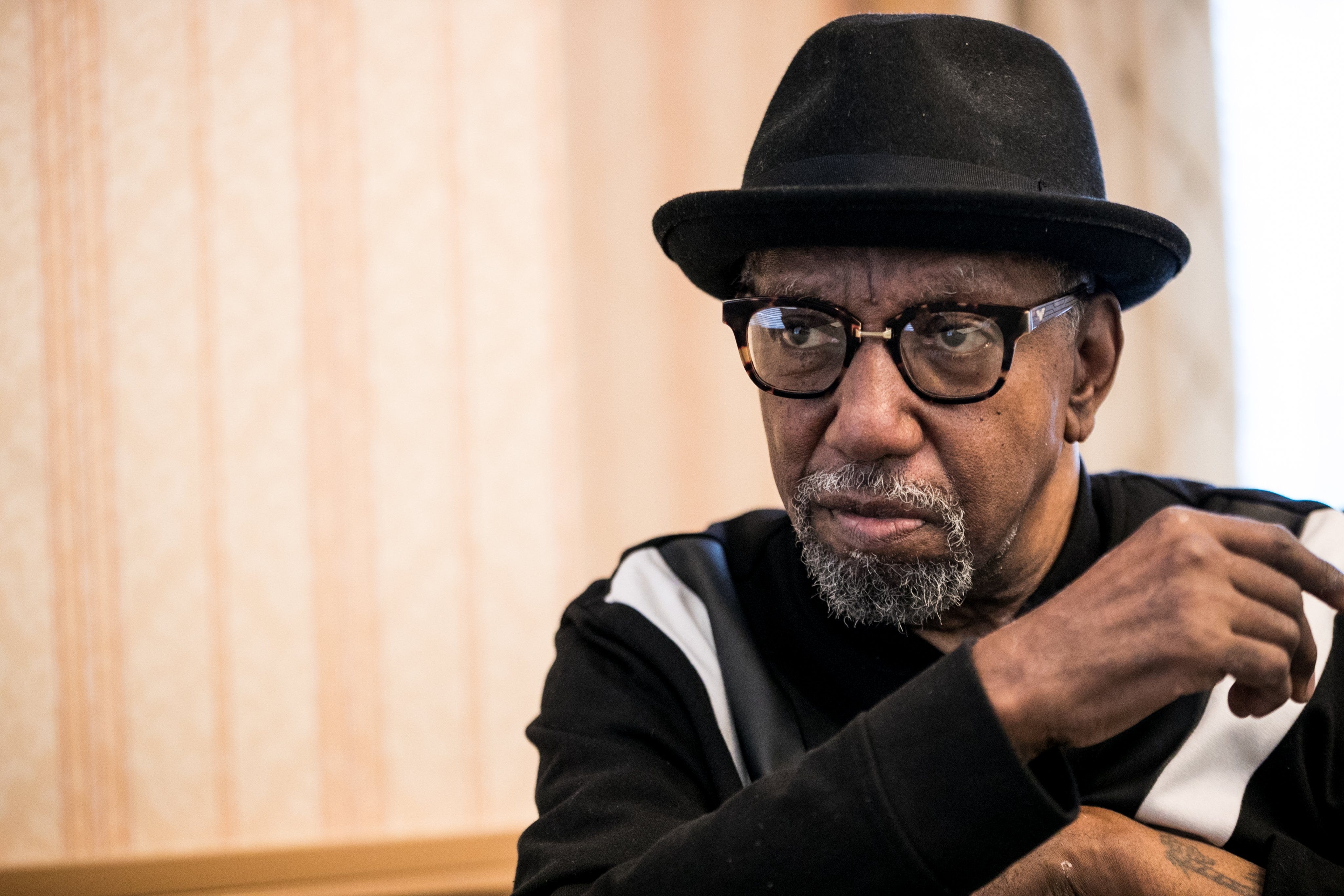
Barrett Strong in 2019. Photo by Dan MacMedan, USA Today Network.
Strong co-wrote numerous songs with Motown producer Norman Whitfield, including “I Heard It Through the Grapevine” (which was originally recorded in 1967 by Marvin Gaye even though his version wasn’t the first to be released) and “Papa Was a Rollin’ Stone” (recorded by the Temptations, 1972).
“I Heard It Through the Grapevine” started when Strong was walking on Michigan Avenue in Chicago and thought about how people often say that phrase. It’s unclear if he knew that the term “grapevine” was connected to the days of slavery, when enslaved people weren’t allowed to learn to read or use telegrams, so the only way they could pass around news was talking to each other directly. I like the image of Strong appearing on the surface to be simply an ordinary person walking down the street, while in his mind he was mulling over a common sentence, possibly repeating it over and over in a simple two-note melody imitating speech, and through that possibly obsessive repetition, it eventually transformed into a thing of greatness …
Crosby cowrote “Eight Miles High” by the Byrds (1966). Wikipedia says it was “[m]usically influenced by sitar player Ravi Shankar and jazz saxophonist John Coltrane,” and has been called “the first bona fide psychedelic rock song, as well as a classic of the counterculture era”:
Jeff Beck, one of the most skilled, admired, and influential guitarists in rock history, died on Tuesday at a hospital near his home in Surrey, England. He was 78.
The cause was bacterial meningitis. …
Here he is last year covering “Isolation,” from John Lennon’s debut solo album, Plastic Ono Band album (1970), with Johnny Depp singing and playing rhythm guitar. Notice how Beck plays guitar solos using his thumb instead of a pick — that makes it much harder to play fast, so that’s a sign he cared less about drawing attention to his own speed or virtuosity than about allowing us, the listeners, to savor the tone and expressiveness of each note:
From the NYT obituary:
During the 1960s and ’70s, as either a member of the Yardbirds or as leader of his own bands, Mr. Beck brought a sense of adventure to his playing that helped make the recordings by those groups groundbreaking.
In 1965, when Mr. Beck joined the Yardbirds, to replace another guitar hero, Eric Clapton, the group was already one of the defining acts in Britain’s growing electric blues movement. But his stinging licks and darting leads on songs like “Shapes of Things” and “Over Under Sideways Down” added an expansive element to the music that helped signal the emerging psychedelic rock revolution.
Three years later, when he formed his own band, later known as the Jeff Beck Group — along with a then little-known singer, Rod Stewart, and the equally obscure Ron Wood on bass — the weight of the music created an early template for heavy metal. Specifically, the band’s 1968 debut, “Truth,” provided a blueprint that another former guitar colleague from the Yardbirds, Jimmy Page, drew on to devise Led Zeppelin several months later.
Jeff Beck plays lead guitar on a beautiful song on Stevie Wonder’s Talking Book album (1972), “Lookin’ for Another Pure Love.” Listen to the whole song and notice Jeff Beck’s solo starting just after 1:45. You can sense Wonder delighting over the solo, laughing and saying: “Do it, Jeff!” After the solo, Beck’s leads continue interacting with Wonder’s singing.
For a change of pace, here he is playing with Stevie Wonder on “Superstition,” a more upbeat and better-known song from the same album. Wikipedia says the song was created in the studio when Jeff Beck started playing not guitar but the drum beat. Stevie Wonder told him to keep playing it; they started improvising together, and that turned into this song:
More from the Times:
In 1974, when Mr. Beck began his solo career with the “Blow by Blow” album, he refigured the essential formula of that era’s fusion movement, tipping the balance of its influences from jazz to rock and funk and in the process creating a sound that was both startlingly new and highly successful. “Blow by Blow” became a Billboard Top Five, a platinum hit and his most popular work.
Along the way, Mr. Beck helped either pioneer, or amplify, some important technical innovations on his instrument. He elaborated the use of distortion and feedback effects, earlier explored by Pete Townshend; intensified the effect of bending notes on the guitar; and widened the range of expression that could be coaxed from devices amended to the guitar like the whammy bar.
Drawing on such techniques, Mr. Beck could weaponize his strings to hit like a stun gun, or caress them to express what felt like a kiss. His work had humor too, with licks that could cackle and leads that could tease.…
Here’s an 11-minute video by Rick Beato on “why Jeff Beck is uncopyable.” Recording this video in October 2022, Beato emphasized that Jeff Beck was still “as good as he ever was” at age 78:
Jeff Beck was ranked #5 on Rolling Stone’s list of the 100 greatest guitarists of all time, in 2015. (The voters for that list included Eddie Van Halen, Brian May of Queen, Joe Perry of Aerosmith, Billy Corgan of the Smashing Pumpkins, Jerry Cantrell of Alice in Chains, Kirk Hammett of Metallica, and Thurston Moore of Sonic Youth.) Beck’s entry on the list was written by Mike Campbell, from Tom Petty and the Heartbreakers, who said:
Jeff Beck has the combination of brilliant technique with personality. It’s like he’s saying, “I’m Jeff Beck. I’m right here. And you can’t ignore me.” Even in the Yardbirds, he had a tone that was melodic but in-your-face — bright, urgent and edgy, but sweet at the same time. …
There is a real artistry to playing with and around a vocalist, answering and pushing him. That’s the beauty of those two records he made with Rod Stewart, 1968’s Truth and 1969’s Beck-Ola. Jeff is not getting in the way, but he’s holding his own. …
I saw him last year at a casino in San Diego, and the guitar was the voice. You didn’t miss the singer, because the guitar was so lyrical.
She wrote many Fleetwood Mac songs, including “Don’t Stop,” on their 1977 album Rumours.
As you can see in this video, Christine McVie sang the second verse, after the first verse was sung by guitarist Lindsey Buckingham. They sing the last verse together.
President Bill Clinton ended his speech at the 2000 Democratic convention, when Al Gore was nominated, by saying: “Don’t stop thinking about tomorrow,” right as that song started playing.
Christine McVie in concert on June 8, 2019 (via Wikipedia).
H-D-H wrote “Baby Love,” which made the Supremes the first Motown group to have multiple #1 singles in the US. Here’s a live performance by the Supremes (with Diana Ross singing lead):
Here’s a video of Dozier talking about writing some of the H-D-H songs. He keeps saying about different songs: “It’s always about love. … It’s all about love.”
That video ends with Dozier talking about “How Sweet It Is (To Be Loved by You),” which was originally performed by Marvin Gaye, before James Taylor recorded an even more successful version. Here’s the original:
Dozier grew up in Detroit. In 2004, he told NPR it was an elementary school teacher who liked his writing and encouraged him to keep at it. “She thought it was very astute of me to have such a feel for words and stuff,” Dozier said, “So I started to put these words to music by the time I was, like, 12 or 13.”
NPR neglects to mention that H-D-H went beyond just songwriting, as Wikipedia explains:
During their tenure at Motown Records from 1962 to 1967, Dozier and Brian Holland were the composers and producers for each song, and [Brian’s older brother] Eddie Holland wrote the lyrics and arranged the vocals.
During [Berry] Gordy’s reign at Motown, the record label was run like an auto plant because that was the only other work environment the boss knew, Mr. Dozier said. The songwriters, session musicians and others had to punch a clock. As part of “quality control” each Friday, H-D-H and other songwriters had to write down their songs from the week, and Gordy and other executives would vote on the ones they liked.
The H-D-H songs were usually the winners, Mr. Dozier said.
Lamont Dozier said that he wanted to write “a journey of emotions with sustained tension, like a bolero. To get this across, I alternated the keys, from a minor, Russian feel in the verse to a major, gospel feel in the chorus.” He developed the lyrics with Eddie Holland, aiming for them to sound “as though they were being thrown down vocally.” Dozier said that they were strongly influenced by Bob Dylan at the time, commenting: “We wanted Levi [Stubbs] to shout-sing the lyrics … as a shout-out to Dylan.” For the recording, the writers and producers intentionally put Levi Stubbs at the top of his vocal range, according to Abdul Fakir of the Four Tops, “to make sure he’d have that cry and hunger and wailing in his voice.”